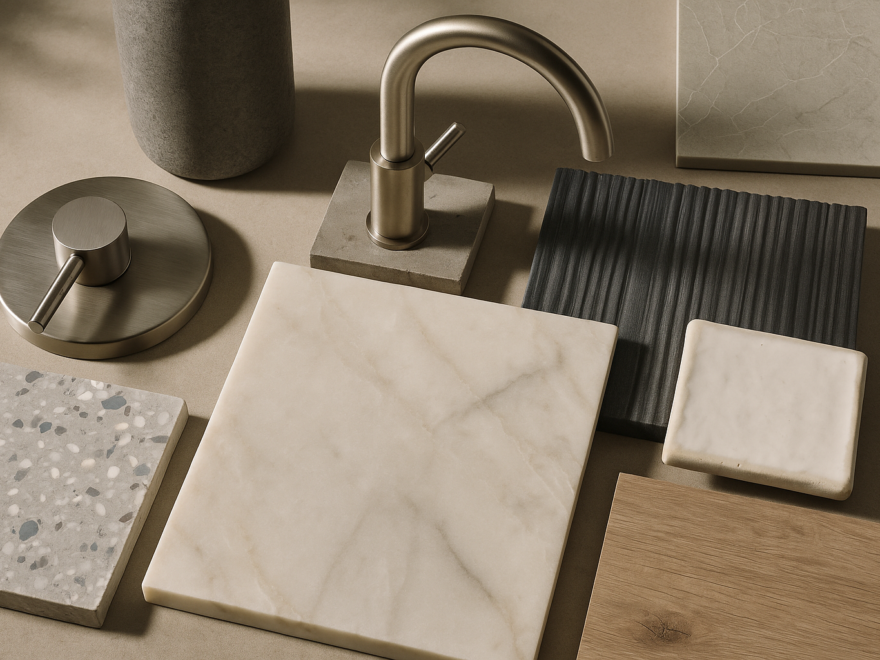
Bathroom Materials and Surfaces
Why materials matter
Selecting the right materials for your bathroom affects its durability and appearance. Bathrooms face constant moisture and wear, so materials must handle these conditions. The wrong choice can lead to costly repairs and frequent replacements.
Choosing bathroom tile types
Tile is a popular choice for bathrooms due to its water resistance and variety. Porcelain and ceramic tiles are common, but they differ in durability and porosity. Porcelain is denser and less porous, making it better for wet areas. Ceramic tiles are more affordable but can absorb more water.
One common mistake is using tiles with high porosity on floors or shower walls, which can lead to water damage. Another consideration is slip resistance, especially for flooring tiles. Matt finishes or textured surfaces reduce slipping risks but may be harder to clean.
Countertop materials for bathrooms
Bathroom countertops must resist moisture, stains, and daily wear. Popular options include quartz, granite, and solid surface materials. Quartz offers uniformity and low maintenance but can be more expensive. Granite is durable but requires sealing to prevent staining. Solid surface materials provide seamless installation but can scratch more easily.
Choosing between natural stone and synthetic surfaces involves tradeoffs. Natural stone has unique patterns but needs more upkeep. Synthetic materials offer consistent appearance and easier maintenance but may lack the same aesthetic appeal.
Waterproof wall coverings
Walls in wet zones need waterproof coverings to prevent mold and damage. Tiles are standard, but alternatives like waterproof wall panels or specialized paints exist. Panels can speed installation and reduce grout lines, lowering maintenance needs. However, improper sealing of edges can allow water infiltration, causing hidden damage.
Paints labeled as waterproof or mold-resistant provide some protection but are best used outside of direct water exposure areas. Choosing the right wall covering depends on the bathroom layout and moisture exposure patterns.
Durable flooring options
Following a bathroom maintenance checklist helps keep all materials in good condition and identifies issues early. Neglecting maintenance often leads to mold growth, surface deterioration, and expensive restoration.
Flooring must withstand water, foot traffic, and cleaning chemicals. Vinyl and luxury vinyl tiles are popular for their water resistance and ease of installation. Natural stone floors offer durability but can be slippery and require sealing. Porcelain tile is a strong option but needs proper grout sealing to avoid water seepage.
Natural stone vs. synthetic surfaces
Incorrect installation or poor sealing can lead to water damage under the floor, causing structural issues. It is important to select flooring that balances durability with safety and maintenance requirements.
Natural stone surfaces bring a unique look but demand more care. They can stain or etch if exposed to harsh cleaners or acidic substances. Synthetic surfaces are engineered to resist stains and scratches better but may lack the depth and character of stone.
Maintenance of bathroom materials
Deciding between these options requires weighing appearance against maintenance effort and cost. For bathrooms with heavy use, synthetic surfaces may offer better long-term value despite less visual uniqueness.
Understanding the properties and limitations of each material is crucial. For example, selecting tile or countertop materials without considering moisture exposure or cleaning requirements can cause premature failure. Consulting a choosing bathroom materials guide can clarify options and help avoid common pitfalls.
Making informed choices for bathroom materials
Regular maintenance extends the life of bathroom surfaces and prevents costly repairs. Sealing stone and grout periodically protects against moisture penetration. Cleaning products must be chosen carefully to avoid damaging finishes or coatings.
Proper installation and ongoing care are equally important. Materials that perform well in one bathroom may fail in another if not matched to the environment and use patterns. Thoughtful selection reduces risks and improves the bathroom’s longevity and appearance.