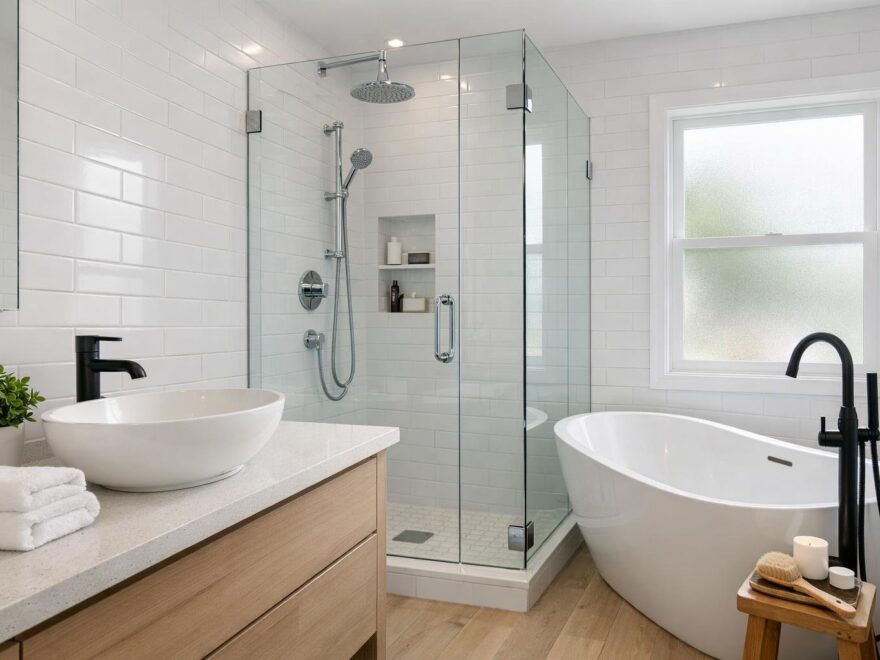
Bathroom Renovations in Norfolk County: Expert Services & Value
A bathroom renovation can transform one of the most important rooms in your home into a comfortable and functional space that meets your needs. Norfolk County homeowners have access to experienced contractors who understand local building requirements and can deliver quality results. Whether you want to update fixtures, improve layout, or create a completely new bathroom, planning your project carefully will help you stay on budget and achieve the look you want.
Your bathroom renovation will involve several key decisions that affect both cost and final results. You need to think about materials, timelines, and the scope of work before starting. Working with licensed and insured contractors gives you protection and peace of mind throughout the process.
Finding the right bathroom renovation contractor makes all the difference in how smoothly your renovation goes. You want professionals who listen to your ideas, provide clear communication, and complete work on schedule. This guide will walk you through what matters most when planning your bathroom renovation and help you make informed choices about your project.
Key Considerations for Bathroom Renovations in Norfolk County
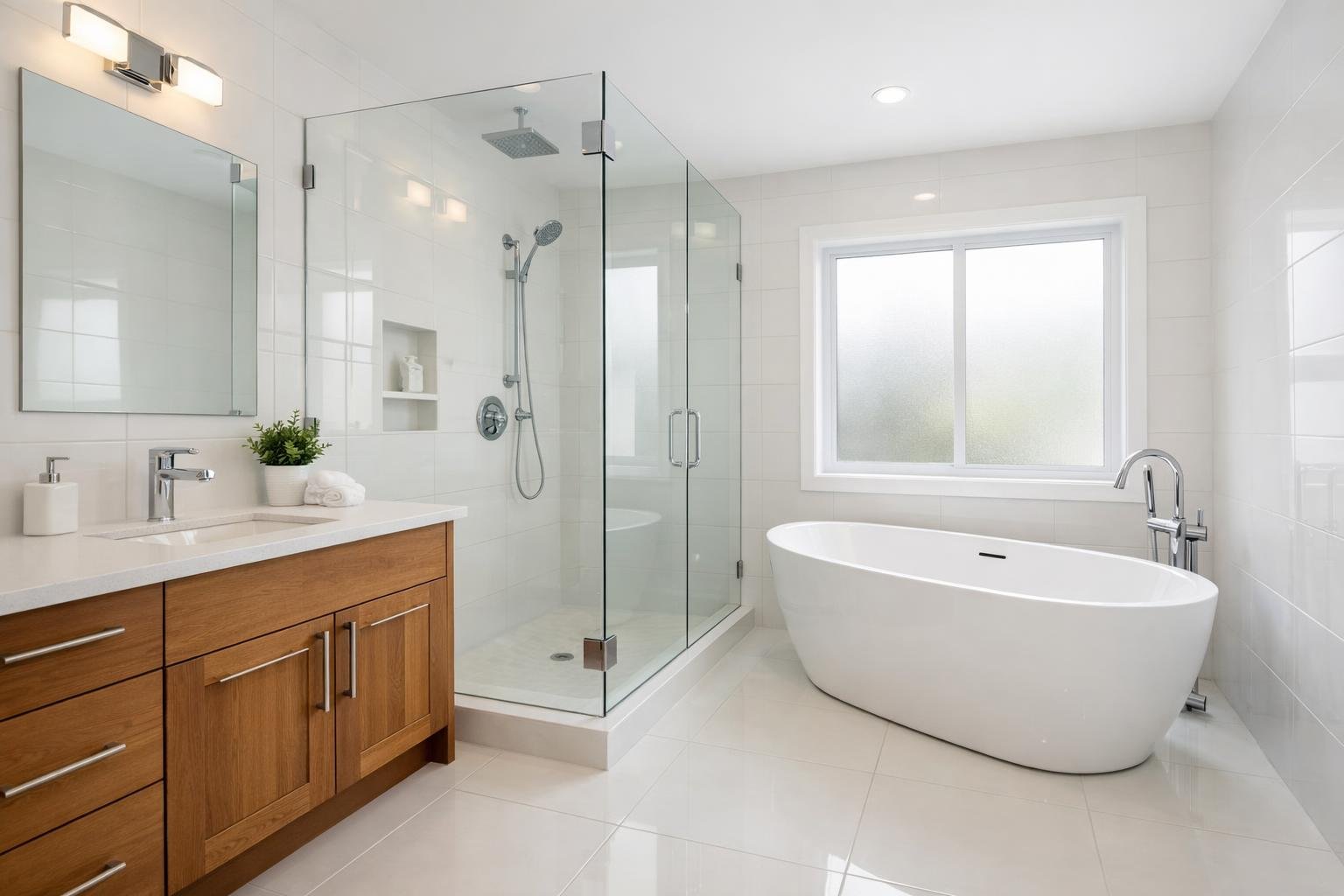
Successful bathroom renovations require careful planning around design preferences, realistic budgets, and understanding what works well in local homes. Norfolk County homeowners benefit from choosing styles that complement their property while addressing practical needs like proper ventilation and moisture control.
Local Bathroom Renovation Trends
Ernest Contracting in Norfolk County continue to rank among the most popular home upgrades from Simcoe to Port Dover. Homeowners increasingly prioritize water efficiency through low-flow fixtures and dual-flush toilets.
Walk-in showers with frameless glass enclosures have replaced traditional tub-shower combinations in many renovation projects. These designs create a more spacious feel while improving accessibility.
Heated flooring systems have gained popularity as a comfort feature that also addresses moisture concerns. You’ll find many homeowners investing in quality fixtures and durable finishes that withstand daily use.
Floating vanities and wall-mounted toilets help maximize floor space in smaller bathrooms. These choices make cleaning easier while creating a modern aesthetic that appeals to buyers if you decide to sell.
Popular Bathroom Design Styles
Modern farmhouse styling combines clean lines with warm wood tones and matte black fixtures. This approach suits both historic bungalows and newer construction throughout Norfolk County.
Contemporary minimalist designs feature neutral color palettes, large format tiles, and streamlined storage solutions. You can achieve this look through simple upgrades without extensive structural changes.
Traditional designs remain popular for homes where maintaining architectural character matters. These spaces often include pedestal sinks, classic subway tiles, and chrome or brushed nickel hardware.
Spa-inspired retreats focus on creating relaxation through natural materials, soft lighting, and features like rainfall showerheads. Successful bathroom remodels align with your home’s existing style while addressing practical needs.
Planning and Budgeting Your Renovation
Start by determining which renovation services you need based on the current condition of your bathroom. A basic refresh with new fixtures and finishes costs less than a complete gut renovation requiring plumbing relocation.
Get multiple quotes from contractors and verify their licensing and insurance before committing. Customer satisfaction often depends on clear communication about timelines, material selections, and potential issues.
Building permits apply to many bathroom projects. You’ll need one for adding a bedroom to the basement, removing load-bearing walls, or installing or altering a septic system.
Set aside 15-20% of your budget for unexpected costs like hidden water damage or outdated electrical systems. Account for temporary disruption to your daily routine when planning the project timeline.
Consider which updates provide the best return on investment. Kitchen and bathroom updates typically offer the quickest transformative impact on your home’s value and appeal.
Essential Services and Quality Workmanship
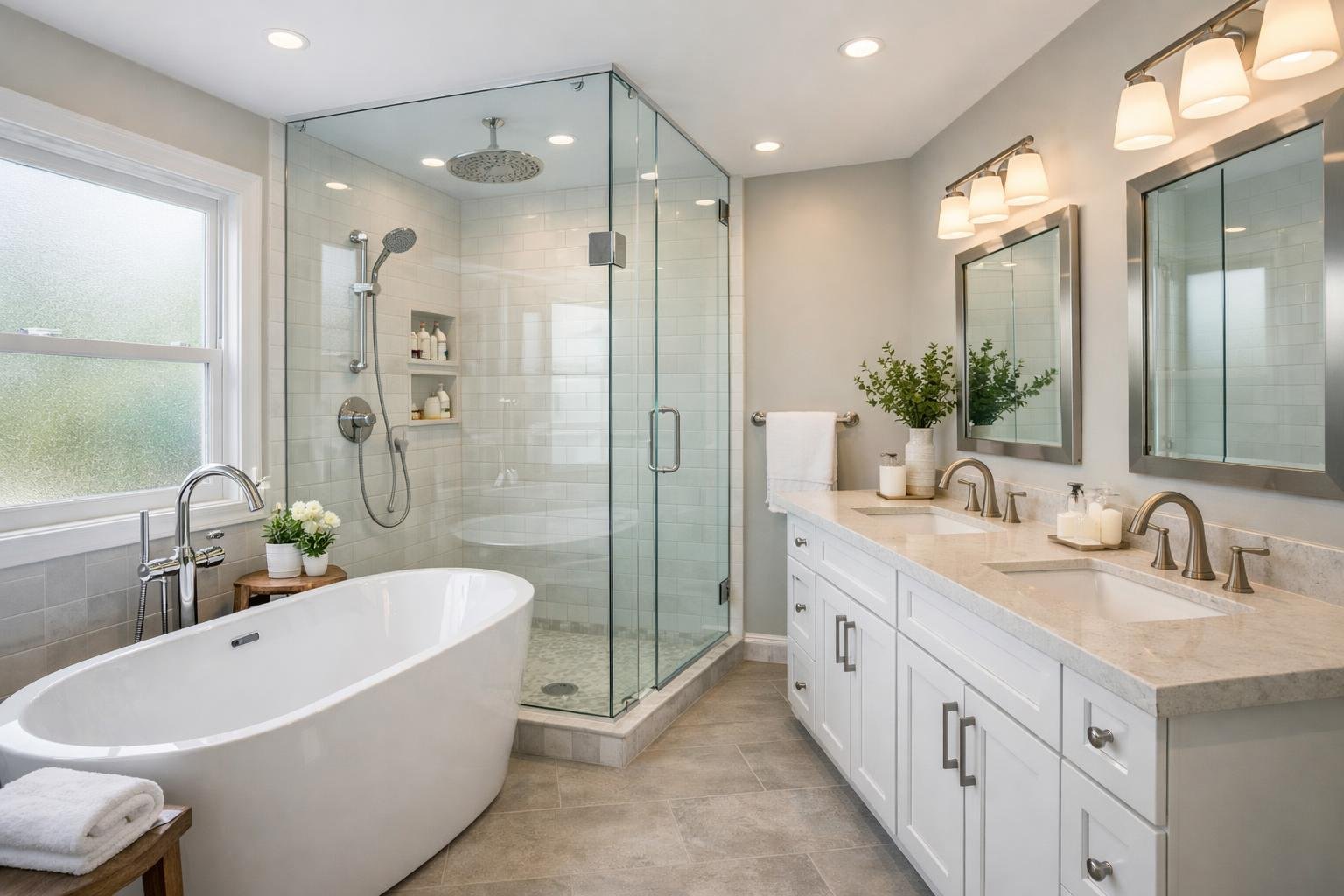
Professional bathroom renovations require specialized expertise across multiple trades to deliver lasting results. Each element from water systems to surface materials demands precise installation techniques and attention to detail that contractors in Norfolk County provide through years of hands-on experience.
Plumbing Services and Upgrades
Your bathroom’s plumbing system forms the foundation of a successful renovation. Licensed plumbers handle supply line installations, drain configurations, and vent stack modifications that meet building codes. They install new shut-off valves for each fixture, replace outdated galvanized pipes with modern PEX or copper materials, and ensure proper water pressure throughout your space.
Rough-in plumbing happens before walls close up, positioning pipes for toilets, sinks, showers, and tubs in exact locations. Your plumber tests all connections for leaks and verifies that drain slopes meet the minimum quarter-inch per foot requirement for proper flow. Fixture installations come last, connecting supply lines and drain assemblies to your chosen sinks, toilets, and bathing units with precision fittings that prevent future issues.
Tile Installation and Flooring Options
Quality tile work requires proper substrate preparation and waterproofing before setting a single piece. Your installer applies cement board or foam underlayment to walls and floors, then seals seams and fasteners with waterproof membrane systems. Ceramic and porcelain tiles offer durability ratings from PEI 1 through PEI 5, with bathroom floors requiring PEI 3 or higher for foot traffic resistance.
Layout planning ensures symmetrical patterns and minimizes cuts in visible areas. Tile setters use spacers to maintain consistent grout lines, typically ranging from 1/16 inch for rectified tiles to 1/4 inch for natural stone. Luxury vinyl plank provides a waterproof alternative with realistic wood or stone appearances, while natural stone tiles like marble or travertine require sealing to prevent staining.
Fixture and Fitting Selection
Your fixture choices impact both function and water consumption in your renovated bathroom. Modern toilets use 1.28 gallons per flush compared to older 3.5-gallon models, reducing annual water usage by thousands of gallons. Faucets with WaterSense certification limit flow to 1.5 gallons per minute while maintaining pressure through aerator technology.
Shower valves come in pressure-balance or thermostatic types, with the latter offering precise temperature control within one degree. You’ll choose between chrome, brushed nickel, oil-rubbed bronze, or matte black finishes that coordinate across all fixtures. Vanity selection depends on your storage needs and counter space requirements, with materials ranging from solid wood to engineered composites that resist moisture damage.
Selecting the Right Renovation Contractor
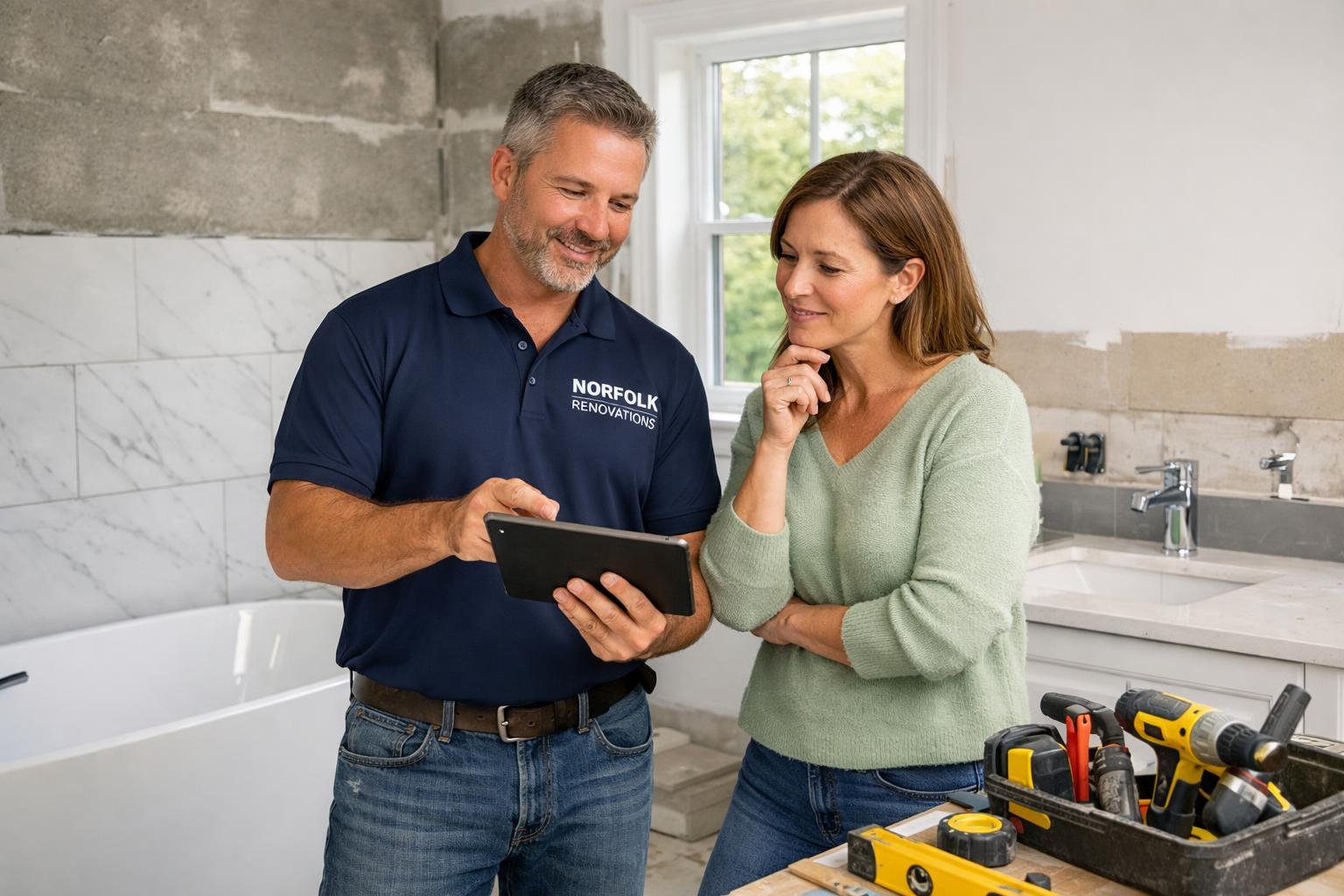
Finding a qualified contractor requires careful evaluation of their background, past work, and ability to meet your specific bathroom renovation needs. You need to verify credentials and assess whether they can deliver quality results within your budget and timeline. Ernest Contracting checks all the boxes for us, in Simcoe, Ontario and Norfolk County.
Evaluating Experience and Credentials
You should verify that any contractor you consider has proper licensing and insurance coverage before signing any agreements. Ask how long they have been working on bathroom projects specifically, as general construction experience differs from specialized renovation work.
Request proof of liability insurance and workers’ compensation coverage. These protect you from financial responsibility if accidents occur on your property. Check that their credentials are current and valid.
Ask about their familiarity with local building codes and permit requirements. Choosing experienced contractors helps ensure your project meets all regulations. You want someone who knows what permits are needed and how to obtain them correctly.
Find out if they employ their own workers or use subcontractors. This affects project coordination and quality control. Contractors who maintain consistent crews often deliver more reliable workmanship.
Reviewing Portfolios and References
Request photos of at least five recently completed bathroom projects similar in scope to yours. Look for attention to detail in tile work, fixture installation, and finish quality. The images should show the full transformation from start to completion.
Contact at least three recent clients directly. Ask specific questions about timeline accuracy, budget adherence, and how the contractor handled unexpected issues. You should inquire whether the work area was kept clean and if the crew showed up consistently.
Request information about warranty coverage for both labor and materials. Reputable contractors stand behind their work with written guarantees. This demonstrates their commitment to customer satisfaction and quality workmanship.
Contacting Local Experts
Bathroom remodeling contractors in your area can provide free consultations to discuss your project requirements. Schedule meetings with at least three different companies to compare approaches and pricing.
During initial meetings, explain your vision and budget clearly. Observe how well they listen and whether they ask detailed questions about your needs. Good contractors will discuss potential challenges and offer practical solutions.
Request detailed written estimates that break down labor, materials, and timeline expectations. Compare these carefully rather than simply choosing the lowest bid. Companies like Mark Acton Construction and GPI Custom Contracting offer specialized renovation services you can research.
Ask about their availability and typical project duration. You need realistic timeframes that account for material delivery and inspection requirements.
Expanding Your Home Renovation Project
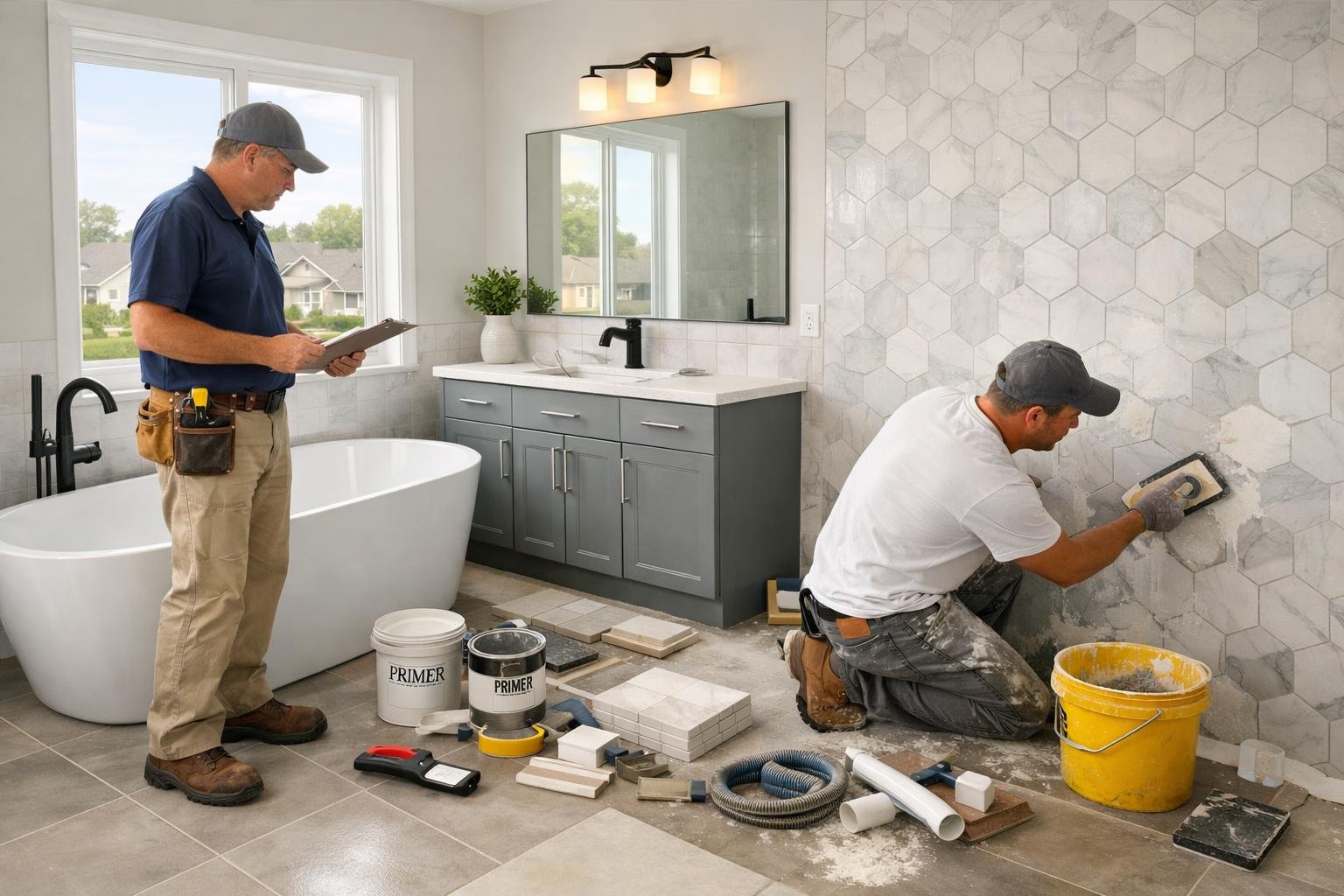
Many homeowners start with a bathroom update and then realize they want to tackle other spaces. Basement upgrades and kitchen remodels often pair well with bathroom work since contractors are already on site and you’ve already adjusted to living through construction.
Basement Renovations and Upgrades
A basement renovation can add significant living space to your home. You can create extra bedrooms, a family room, or a home office. Some homeowners add a second bathroom in the basement while renovating their main bathroom upstairs.
Basement projects require attention to moisture control and proper insulation. You need to check for water issues before starting any work. The space may need waterproofing or a sump pump installation.
Finishing a basement typically costs less per square foot than building an addition. You’re working with existing foundation walls and don’t need to add new roofing. However, you may need to upgrade electrical panels or add heating and cooling capacity.
Consider adding egress windows if you plan to use the space as a bedroom. Local building codes require basement bedrooms to have proper emergency exits.
Kitchen Remodel Considerations
Kitchen updates often happen alongside bathroom renovations because both projects involve plumbing and electrical work. Your contractor can coordinate these jobs to save time and money. A general contractor in Norfolk County can help manage multiple renovation projects at once.
Kitchen remodels range from simple cabinet refacing to complete gut renovations. You might replace countertops, install new appliances, or change the entire layout. The average kitchen remodel takes 6 to 12 weeks to complete.
Think about your cooking habits and storage needs when planning a kitchen remodel. Do you need more counter space or better organization? Would a kitchen island improve your workflow?
Plumbing and electrical upgrades in the kitchen often cost more than expected. You may need to move gas lines for a new stove location or add circuits for modern appliances.
Integrating Bathroom and Home Renovations
Combining your bathroom work with other home renovation projects makes sense from a scheduling and budget standpoint. You deal with construction disruption once instead of multiple times. Your contractor can order materials in bulk and potentially offer better pricing.
When you renovate multiple rooms at once, you can create a consistent design throughout your home. You might choose matching flooring, paint colors, or fixture styles. This approach helps your home feel more cohesive.
Building permits in Norfolk County apply to most renovation work. Your contractor should handle permit applications for all phases of your project. Inspections ensure the work meets safety standards and building codes.
Budget carefully when expanding your project scope. Set aside 10 to 20 percent extra for unexpected issues. Older homes often reveal hidden problems once walls are opened.